How to Choose a Surf Camp in El Salvador
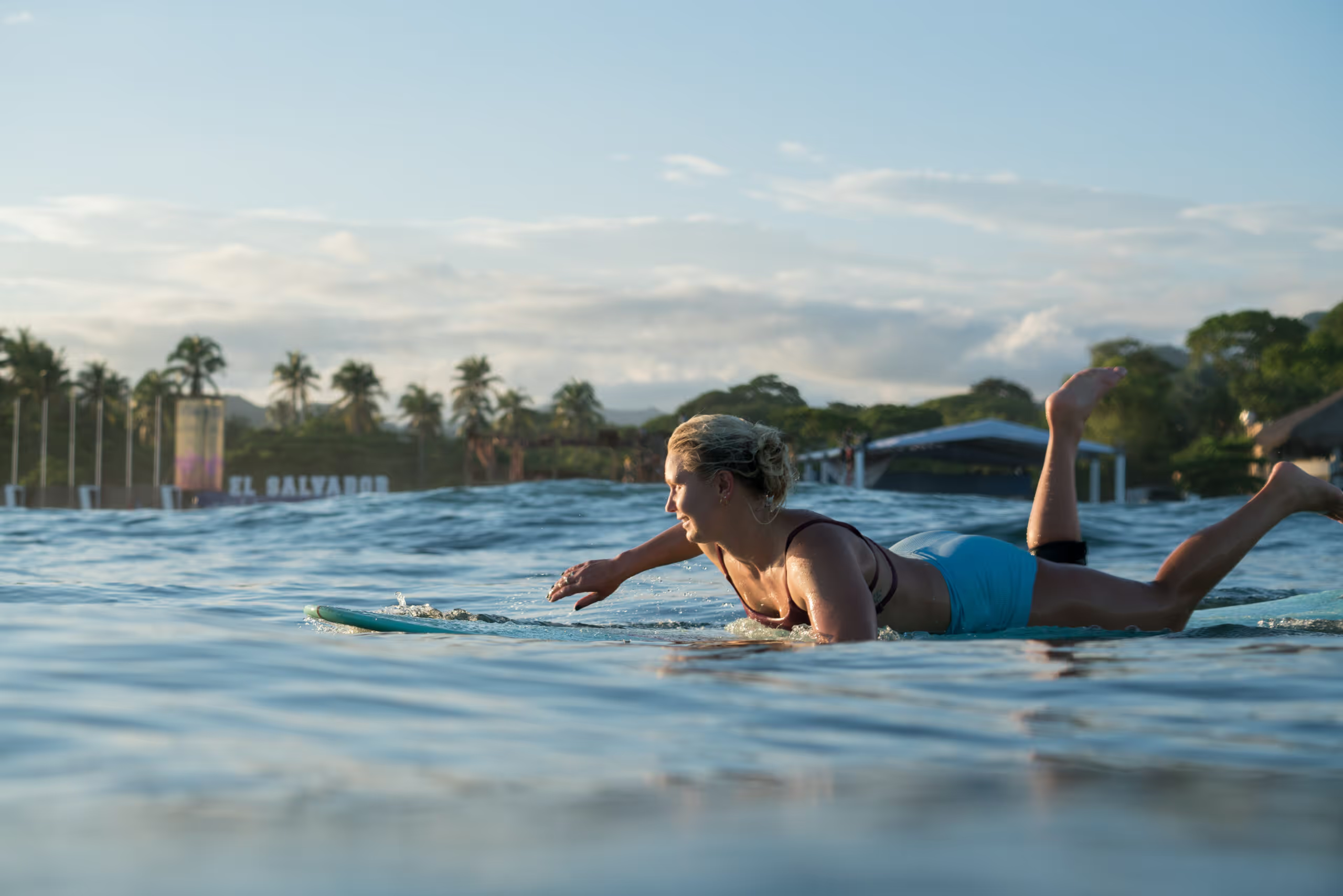
What to check before booking a surf camp in El Salvador: location, coaching, group size, what's included, season, and price. From the Puro Surf team.
"Surf camp" means very different things in El Salvador. For some places it is a bed near the beach, a board, and a lesson if you ask for one. For others it is a full week of coaching with a plan for every day. Both can be a good trip. They are not the same trip, and the name on the website will not tell you which one you are booking.
We run a hotel and surf academy in El Zonte, so we are not neutral. But we talk every week to surfers who are comparing options, and the same few questions decide whether they go home happy. This is the list we would give a friend.
Start with what you want from the week
Before you compare camps, be honest about the goal. Most people fit one of three:
- You want to learn. You have surfed fewer than ten times, or never. You need patient instruction, a forgiving wave, and someone watching you the whole session.
- You want to improve. You catch waves on your own and you feel stuck. You need feedback you can act on, which usually means video.
- You want to surf a lot with the logistics handled. You do not need coaching. You need a good location, transport to the right break, and people who know the conditions.
A camp built for the third group can frustrate the first two, and the other way around. Everything below is easier to judge once you know which one you are.
Seven things to check before you book
1. Where the camp is based
Most surf travel in El Salvador happens on the western coast, in La Libertad, about an hour from the airport. El Zonte is a long, friendly point with room to make mistakes. El Sunzal is a bigger right with sections for different levels and a crowded lineup. El Tunco is the nightlife town. Punta Roca is the famous wave and not a place to learn. The eastern coast, around Las Flores and Punta Mango, is two and a half hours from the airport, with smaller crowds and less infrastructure.
Ask which break the camp uses for your level and how far it is from your room. Our El Salvador surfing guide covers each break in detail.
2. Who coaches, and how
A lesson and a coaching program are different things. A lesson gets you standing. A program has a method, a goal for each day, and a way to show you what you are doing. Ask whether the coach is in the water with you, whether sessions are filmed, and whether someone sits down with you afterwards to go through the footage. Video is the fastest way to see the gap between what you think you are doing and what you are actually doing.
3. How many surfers per coach
This is the number that changes the week the most, and many camps do not publish it. In a large group, you wait. In a small one, you get corrected on almost every wave. Ask for the maximum group size in writing.
4. Whether groups are split by level
If a first-timer and an intermediate surfer share a coach, one of them is getting the wrong session. Good camps group people by level, not by who they traveled with. If you are coming as a couple or a family with mixed experience, ask how that works.
5. What "all-inclusive" really includes
The phrase has no fixed meaning. Check each of these separately:
- Airport transfers, both ways
- The room, and whether it is private or shared
- Which meals
- Board rental for every coaching day
- Transport to other breaks when the home break is not right for your level
- Extras such as yoga, recovery sessions, or a tour
Two camps with the same price can be far apart once you add what one of them leaves out.
6. What happens when the ocean does not cooperate
Surfing depends on conditions, and no camp controls them. What a camp does control is the plan for a day when the water is unsafe or unsuitable. Ask whether there is structured training on land, whether later sessions are extended, and what the refund policy says. A clear answer is a good sign.
7. The season that fits your level
El Salvador has waves all year and warm water, so you will not need a wetsuit. The difference between seasons is size. From November to April the swells are smaller and consistent, with average waves of 2 to 3 feet. That suits every level and is the easier window for learning. From May to October the swells are larger, with average waves of 4 to 6 feet and smaller days in between. Rain usually comes late in the day, and mornings tend to be clean.
If you are a beginner, both seasons can work when the coaches choose the spot for you. If you want size, come between May and October.
How long should you stay?
Three days of coaching is enough to learn the basics or to work on one specific thing. Six days is where most people see real change, because there is time to repeat. Two weeks is for surfers who want to move up a level.
If you are flying from the United States or Canada, a week is easy to plan. There are direct flights from most major U.S. hubs to San Salvador (SAL), the currency is the U.S. dollar, the plugs are the same as at home, and the western coast is about an hour from the airport.
What a surf camp in El Salvador costs
Prices vary a lot because the packages do. Compare the price per coaching day and what is bundled, not the headline number.
As a reference, these are our own rates per person as of October 2026, with the room, daily breakfast, airport transfers, boards, and coaching included:
- 4 nights, 3 coaching days: from $1,710 in the dorm to $2,450 in a single room
- 7 nights, 6 coaching days: from $2,580 in the dorm to $3,755 in a single room
- 14 nights, 12 coaching days: from $4,785 in the dorm to $7,030 in a single room
A double room shared by two campers falls in between. Current rates are on the surf camp page.
How our surf camp in El Zonte works
So you can hold us to the same list:
- Location. We are on the beach in El Zonte, about 45 minutes from the airport. You travel by car with your coach to the break that suits the day's conditions, and our driver stays with the car.
- Coaching. Every coaching day follows the same sequence: theory and warm-up, a filmed surf session with your coach, video analysis, and drills on land in the lap pool, the gym, or the concrete wave.
- Group size. A maximum of 4 surfers per group.
- Levels. Three programs: Beginner, Novice, and Foundation. Groups are organized by skill, not by age. Kids are welcome from age 10.
- What is included. The room, house breakfast, airport transfer, board rental on coaching days, afternoon classes such as yoga, an ice bath session, and a massage. The full-week and two-week camps add a half-day tour.
- Bad conditions. If a session in the water is cancelled, the program continues on land, and coaches may extend later sessions when there are days left.
- Dates. Camps run every week of the year, Sunday to Sunday.
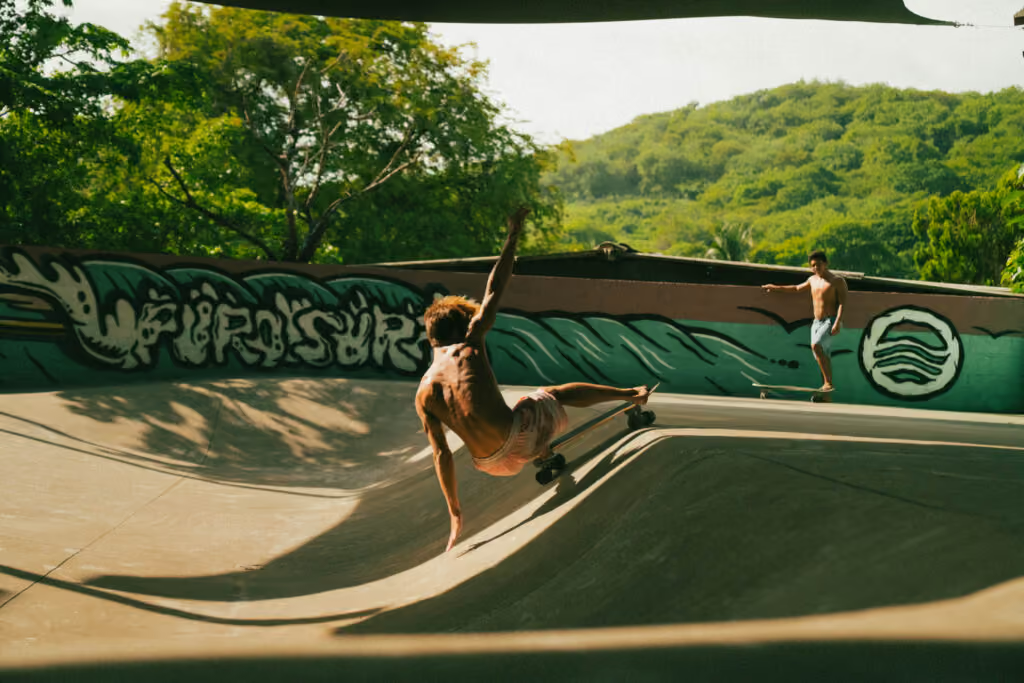
It is not the right camp for everyone. If you want to surf on your own schedule with no structure, or you want nightlife at the door, El Tunco will suit you better. If you want to leave surfing better than you arrived, this is what we built it for.
Common questions
Do I need experience to join a surf camp?
No. Our Beginner program is designed for people who have been out with a board ten times at most, including never.
Can I bring someone who does not surf?
At Puro Surf, yes. A non-participating guest can stay in the same room at no additional cost, with house breakfast included. The coaching sessions are for participants only.
Do I need to bring a board?
No. Your coach assigns you a board each coaching day. You are welcome to bring your own if you prefer.
Can I join without staying at the hotel?
Yes. The same training program runs Monday to Saturday (6 days) or Monday to Wednesday (3 days) without accommodation. Contact us for this option.
Is El Salvador safe for a surf trip?
For surf travel along the coast, yes. The surf zones feel calm and comfortable for visitors, and most places, including ours, collect you at the airport and bring you straight to the coast.
Ready to compare?
If you have a short list, send each camp the seven questions above and put the answers side by side. If we are on that list, the full program, levels, and prices are on our surf camp in El Salvador page. Or write to us and we will help you pick the right level and dates.