El Salvador Surfing Guide
.jpg)
A local guide to surfing in El Salvador. Best breaks by skill level, season-by-season conditions, logistics, and what to skip.
Surfing in El Salvador: A Guide From thePeople Who Live Here
El Salvador is small, warm, and lined withright-hand point breaks. The Pacific coast runs roughly east to westalong the southern edge of the country, which means swells from thesouth wrap into a series of cobblestone and reef points that firemost days of the year. No wetsuit. No closed seasons. A 50-minuteflight from Miami and an hour-long drive from the airport.
We've run a hotel and surf academy at ElZonte for years now. This is the version of the guide we'd give afriend who messaged us asking whether El Salvador is worth the tripand where to actually go once they're here. If you want the bookingversion, that's our SurfCamp Coaching Week —but read this first.
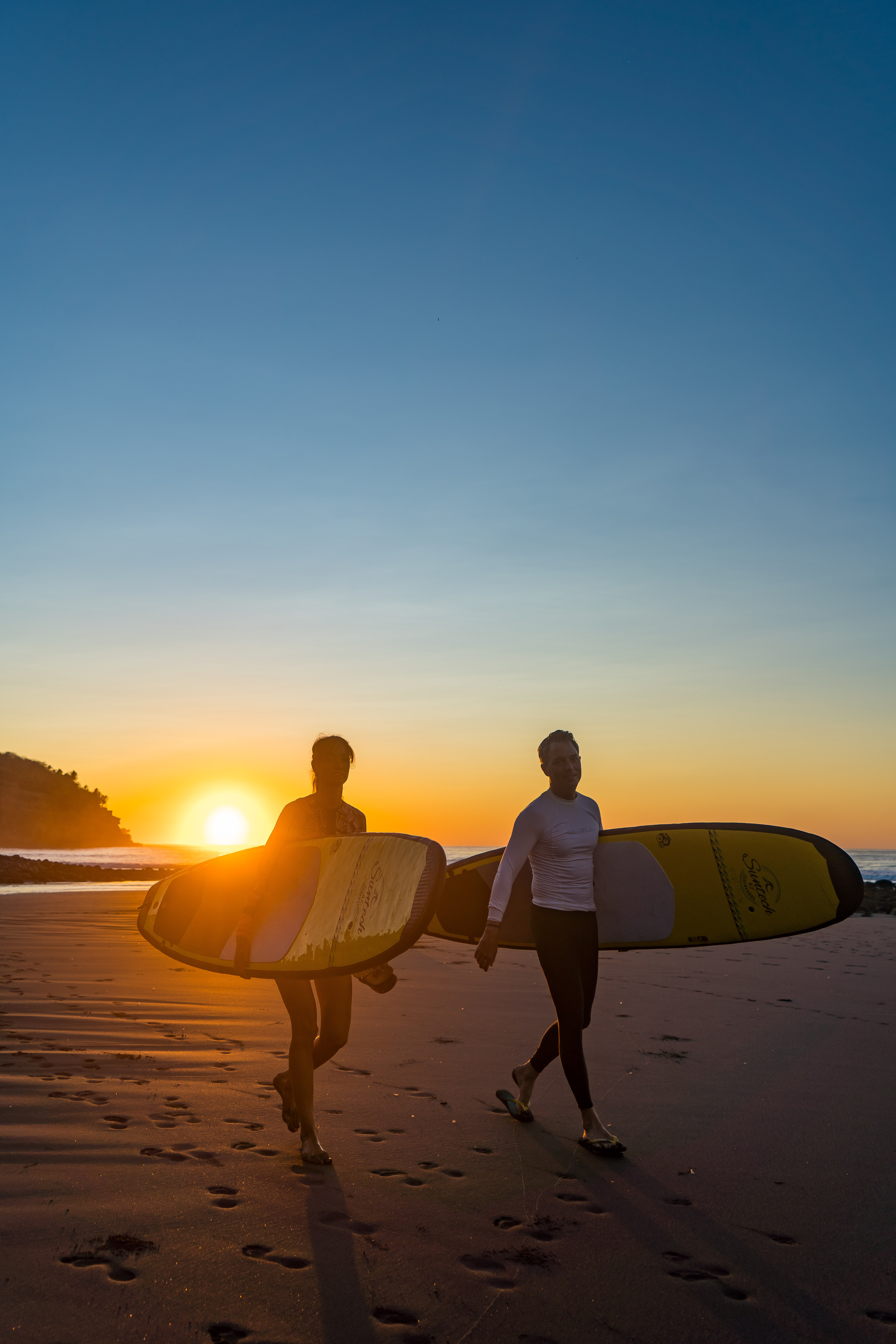
When to come
The country has two seasons, and thepractical difference is wave size.
Dry season runs roughly November throughApril. Smaller swells (chest- tohead-high on most days), glassier conditions, lighter offshores inthe morning. This is the easier window if you're learning, rebuildingafter time off, or traveling with someone who doesn't surf and youwant predictable beach weather. It's also the busier window —Christmas through March is when most international surfers show up.
Wet season runs May through October.Bigger, more powerful swells (head-high to occasionallydouble-overhead on the cleaner days), more south energy, moreconsistency. Rain comes in the late afternoon and evening, not allday. Mornings are usually clean. If you surf at theintermediate-and-up level and want the version of El Salvador thatdraws pro photographers, this is when to book.
The honest version: both seasons surf. Thedifference is the size of what you'll be paddling into, not whetherthere will be waves.
Where to surf — westcoast (La Libertad)
The original El Salvador surf zone, an hourfrom the airport, with breaks strung along a 30-kilometer stretch ofcoast. This is where most surf travel still happens.
El Zonte.Long, friendly point that handles all sizes. Easier to read than mostpoints in the area, with a wide takeoff zone and a forgiving insidesection. This is where we run our beginner and novice programsbecause the wave gives you room to fail. El Zonte is also theoriginal Bitcoin Beach — the village experiment that put thecountry on the cryptocurrency map. Beyond surf, it's a workingfishing town with a handful of small restaurants. Mellow.
El Sunzal.Twenty minutes east of El Zonte. A longer, slightly bigger rightpoint with three sections: the inside (beginner-friendly mush), themiddle (intermediate), and the outside takeoff (advanced). The lineupgets crowded — this is where surf schools, day-trippers from SanSalvador, and visiting pros all stack up. Excellent wave; manage yourexpectations on space.
Punta Roca.The most famous wave in the country and a legitimate world-classright-hander. Long, fast, hollow, breaking over rocks in front of thetown of La Libertad. Hosted the ISA World Surfing Games in 2021. Thelineup is heavy: Salvadoran locals, traveling pros, and weekendwarriors from the capital all want the same peak. We sendfoundation-level and above to surf it. We send beginners somewhereelse.
La Bocana.The river-mouth wave next to Punta Roca, with both a left and aright. Sand-bottom and more forgiving than the rocks at Punta Roca,it can be excellent on the right tide. Watch the river outflow afterheavy rain.
El Tunco.Less a wave than a town — the nightlife hub of the western coast.Decent rights on the point, OK lefts further out, and bars and streetfood after dark. Stay here if you want a louder trip; commute overhere for an evening if you don't.
Where to surf — eastcoast (Oriente Salvaje)
A different country, basically. Two and ahalf hours from the airport on paved highway, the eastern coast(locally called Oriente Salvaje, "wild east") opens intolonger, less-touched points. Smaller crowds, less infrastructure,more commitment to get there.
Las Flores.A 300-meter right-hand point peeling over cobblestones in a naturalcove near El Cuco. Walk-to-surf access if you're staying at one ofthe resorts on the bay. Intermediate to advanced; the bay itself hasgentler whitewater for learners. The wave is exceptional and thelineup is small.
Punta Mango.Heavier, hollower right reachable by panga from the El Cuco area.Strong takeoff, fast wall, real consequences if you fall in the wrongspot. Advanced only.
There are more spots out east than we'velisted — boat-access reefs, hidden river mouths — but they'rebest surfed with a local guide rather than from a map.
What level can surfwhere
First surf trip ever, or fewer than tentimes on a board: El Zonte, theinside of El Sunzal, or the bay at Las Flores. Avoid Punta Roca, theoutside at El Sunzal, and Punta Mango. Take lessons — the breakshere are powerful even at small sizes, and the right instruction inweek one saves you months later.
Can paddle out unbroken waves, catchgreen ones, and ride to the shoulder:El Zonte point, the middle of El Sunzal, Las Flores on a smaller day,La Bocana on the right tide.
Top-to-bottom maneuvers, confidentreading the ocean: anything onthis list, plus the heavier outside sections. Ouracademy program isbuilt around moving surfers up through these levels with videoanalysis and structured drills.
Logistics
Getting in.San Salvador (SAL) is the country's only international airport.Direct flights from most major U.S. hubs, plus connections throughMexico City and Bogotá. From SAL it's roughly an hour to El Zonte,75 minutes to La Libertad / Punta Roca, and 2.5 hours to El Cuco /Las Flores. Most accommodations arrange airport transfers; taking ataxi or rideshare from arrivals into surf country isn't standardpractice.
Currency.U.S. dollar. (El Salvador also officially accepts Bitcoin, thoughdollar is what you'll actually use everywhere.) ATMs are common inSan Salvador and along the western beaches; bring some cash for theeast coast.
Plugs.Type A and B, 120V — same as the U.S. and Canada. No adapter neededfor North American travelers.
Water.Warm year-round (80–85°F / 27–29°C). No wetsuit needed. A rashguard helps with the sun, which is strong even when it's overcast.
Pack.Reef-safe sunscreen (zinc preferred), a wide-brimmed hat, mosquitorepellent for evenings, a basic first-aid kit including ear drops ifyou're prone to swimmer's ear, and your own surfboard if you'reparticular. Otherwise plenty of rental options.
Common questions
Is El Salvador safe?The honest answer in 2026: yes, for surf travel along the coast. Thecountry's homicide rate has dropped dramatically over the last fewyears and the surf zones — both western and eastern — feel calmand tourist-comfortable. We still recommend you stick to known routesbetween San Salvador and the coast (which is what your hotel transferwill do) rather than wandering the capital alone at night.
Do I need a guide?For El Zonte, El Sunzal, and La Bocana — no, you can surf them onyour own once you've checked the conditions. For Punta Roca, theeastern boat breaks, and anywhere with serious current — yes, takea guide the first time. The lineups have their own etiquette and thelocals are the best read on conditions.
Where should I stay?Depends on the trip. We wrote a separate page on that: ElSalvador resorts — an honest guide to where to stay.
Pupusas?Yes. Try one with loroco. Order three.
If you're putting together a trip and wanthelp mapping it — when to come for your level, where to baseyourself, what to pair with what — that's what our SurfCamp Coaching Week isbuilt around. We'll handle the rest.